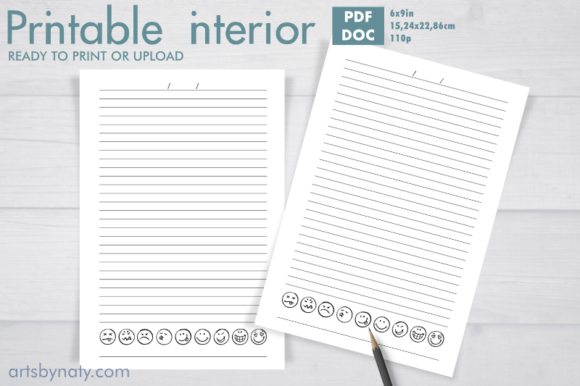
Designing a KDP Lined Journal with Fun Mood Tracker: Technical Specs and Creative Application
The intersection of functional stationery and emotional wellness has created a significant niche in the self-publishing landscape. For creators, educators, and mental health advocates, the KDP lined journal with fun mood tracker represents more than just a notebook; it is a structured tool for cognitive behavioral reflection disguised as an accessible daily habit. Unlike standard diaries, these hybrid formats combine the freedom of open writing with the quantitative data collection of emotional tracking. Understanding the technical specifications, design psychology, and practical applications of this format is essential for anyone looking to utilize or create high-quality resources in this space.
Technical Specifications for Print-Ready Files
Creating a professional-grade interior for Amazon KDP requires strict adherence to printing standards. A common failure point for new publishers is neglecting the relationship between trim size, resolution, and file format. When developing a KDP lined journal with fun mood tracker, the following technical parameters ensure the final physical product meets consumer expectations for quality and usability.
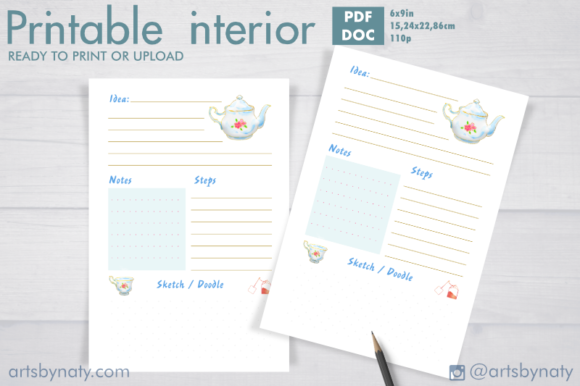
- Trim Size and Dimensions: The industry standard for portable journals is 6x9 inches (15.24 x 22.86 cm). This size offers sufficient surface area for handwriting while remaining compact enough for bag carry. It also optimizes paper usage during the print-on-demand process, keeping costs manageable for both creators and end-users.
- Resolution Requirements: All interior files must be prepared at 300 DPI (dots per inch). While digital screens display images clearly at 72 or 96 DPI, print machinery requires higher density to prevent pixelation. Hand-drawn mood icons are particularly susceptible to jagged edges if exported at low resolutions. Vector-based exports or high-resolution raster scans are mandatory for crisp line work.
- Page Count Optimization: A length of 110 pages strikes a strategic balance. It provides approximately three months of daily tracking content, which is psychologically perceived as a "complete" cycle for habit formation. Furthermore, 110 pages allows for perfect binding without becoming too bulky, ensuring the journal lays relatively flat when opened.
- File Format Versatility: Professional asset packages typically include both PDF and DOC formats. The PDF serves as the immutable, print-ready master file that preserves layout integrity. The DOC file acts as an editable source, allowing users to customize tags, adjust line spacing, or modify mood icons before uploading. This dual-format approach significantly increases the utility of the resource for diverse user needs.
The Psychology of Visual Emotional Tracking
The efficacy of a mood tracker lies in its ability to reduce the cognitive load associated with emotional articulation. Many individuals struggle to identify or name their feelings verbally. By utilizing hand-drawn icons rather than clinical text labels, the journal bypasses linguistic barriers and engages visual processing centers. This is particularly relevant for neurodivergent users, children, or those experiencing alexithymia (difficulty identifying emotions).
The "fun" aspect of the aesthetic serves a functional purpose beyond decoration. Clinical tracking tools can sometimes feel sterile or pathologizing. Integrating whimsical, hand-drawn art styles reframes the activity as self-care rather than medical monitoring. This positive association increases adherence to the journaling habit. When a user looks forward to coloring in a cute icon or selecting a playful symbol, they are more likely to maintain consistency over the long term. Consistency is the primary driver of value in longitudinal emotional data collection.
Customizable Tagging Systems
A critical feature distinguishing advanced trackers from basic ones is the inclusion of user-defined tags. Pre-set emotion lists are often limiting because human emotional states are nuanced and culturally specific. Allowing users to write their own tags for each mood transforms the journal into a personalized lexicon.
For example, a standard tracker might offer "Happy," "Sad," or "Anxious." A customizable system allows a user to tag a day as "Overstimulated," "Creative Flow," "Grieving," or "Cautiously Optimistic." This granularity improves the accuracy of retrospective analysis. Over time, users can identify patterns between specific tags and external triggers, leading to actionable insights about their environment, relationships, and routines. The space provided for custom tagging should be adequately sized to accommodate varying handwriting styles and longer descriptive phrases.
Diverse Applications Across User Groups
While often marketed toward general consumers, the utility of a lined journal with integrated tracking extends across multiple professional and educational domains. Understanding these varied use cases helps in positioning the resource effectively and designing interiors that serve broader needs.
Educational and Developmental Support
Educators and school counselors utilize these journals as social-emotional learning (SEL) tools. For students developing emotional intelligence, the combination of drawing selection and lined writing practice reinforces literacy skills alongside emotional regulation. Teachers can use the custom tag section to help students build vocabulary around feelings. The 6x9 size fits easily into desk cubbies or backpacks, making it a practical classroom resource. Additionally, the non-clinical aesthetic makes it appropriate for school settings where medical-looking charts might be stigmatizing.
Clinical and Therapeutic Adjuncts
Mental health professionals frequently recommend mood tracking as homework between sessions. However, patients often abandon digital apps due to notification fatigue or privacy concerns. A physical KDP lined journal with fun mood tracker offers a tactile alternative that exists offline. Therapists appreciate the custom tagging feature because it reveals the client’s internal language. During sessions, reviewing the past week's entries provides concrete talking points, reducing the reliance on fallible memory. The lined sections allow for narrative context that pure checkbox trackers lack, helping clinicians understand the "why" behind the "what."
Professional Wellness and Burnout Prevention
In high-stress corporate environments, burnout often creeps in unnoticed. Professionals use these journals to monitor energy levels and stress markers alongside traditional productivity metrics. By correlating mood tags with work events, deadlines, or meetings, employees can identify systemic issues in their workflow or workplace culture. The discrete, aesthetically pleasing design allows these journals to be used openly in professional settings without appearing unprofessional. For HR departments and wellness coordinators, providing such resources signals organizational support for mental health in a tangible, non-intrusive way.
Content Creation and Design Adaptation
For designers and KDP publishers, acquiring high-quality source files accelerates product development. The inclusion of editable DOC files alongside print-ready PDFs enables rapid iteration. Creators can adapt the base template for different niches: modifying icons for a gratitude journal, adjusting line spacing for poetry, or rebranding covers for seasonal releases. This modularity maximizes the return on investment for design assets. Furthermore, studying well-structured templates teaches best practices in margin safety, gutter allowances, and visual hierarchy, elevating the overall quality of independent publishing portfolios.
Best Practices for Implementation and Usage
To derive maximum value from this format, whether as an end-user or a creator distributing the resource, certain implementation strategies enhance effectiveness.
- Establish a Routine Anchor: Tracking is most effective when paired with an existing habit. Users should be encouraged to complete their entry at the same time daily, such as immediately after brushing teeth or during morning coffee. This reduces decision fatigue and builds automaticity.
- Prioritize Honesty Over Aesthetics: The "fun" design should not pressure users to select positive moods. Instructions or introductory pages should emphasize that negative emotions are valid data points. A journal filled exclusively with happy faces may indicate performative tracking rather than authentic reflection.
- Leverage the Lined Space for Context: The mood icon captures the state, but the lines capture the cause. Users should be guided to write at least one sentence explaining their selected tag. This narrative bridge is where insight generation occurs.
- Regular Review Cycles: Data without review is merely storage. Encourage weekly or monthly retrospectives where users scan for patterns. Highlighting recurring tags or noting correlations between specific activities and mood states transforms the journal from a record into a diagnostic tool.
- Test Print Before Mass Distribution: For creators using the provided files, always order a proof copy. Screen calibration differs from ink deposition. Verify that the grey tones of hand-drawn icons print with sufficient contrast and that line spacing accommodates average handwriting size. Check that the gutter margin prevents text from disappearing into the binding, especially on the 110-page count.
Navigating Design and Usability Considerations
When evaluating or creating a KDP lined journal with fun mood tracker, several subtle factors determine long-term usability. Paper opacity is a frequent concern with KDP standard color printing; heavy ink coverage on mood icons can sometimes show through to the reverse side. Designs should account for this by avoiding solid black fills in favor of line art or light shading patterns. Single-sided printing options, though increasing page count, can mitigate bleed-through issues for marker users.
Accessibility considerations also matter. Icon sets should be distinguishable even in grayscale printing, as many users opt for cheaper black-and-white interiors. Relying solely on color coding to differentiate moods excludes users who choose monochrome printing or have color vision deficiencies. Shape, expression, and accompanying text labels provide necessary redundancy. Additionally, adequate white space around tracking elements prevents the page from feeling cluttered, which can be overwhelming for users already experiencing emotional distress.
The integration of functional tracking with creative expression represents a mature evolution in the journaling market. By adhering to precise technical standards like 300 DPI resolution and 6x9 dimensions, and by understanding the psychological mechanisms that make visual tracking effective, stakeholders can create or utilize resources that genuinely support well-being. Whether serving as a therapeutic adjunct, an educational aid, or a personal wellness companion, the properly executed lined journal with mood tracker bridges the gap between subjective experience and objective pattern recognition. The availability of comprehensive file packages including both PDF and DOC formats further democratizes access, enabling customization and adaptation across diverse contexts. Ultimately, the value lies not in the paper itself, but in the consistent, reflective practice it facilitates.