Streamlining KDP Publishing with Ready-Made Maze Puzzle Interiors
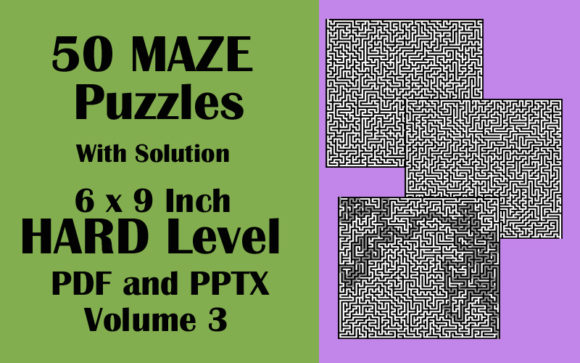
Creating a successful low-content book on Amazon KDP often comes down to balancing quality with efficiency. For publishers focusing on activity books, the interior design phase can be a significant bottleneck. Sourcing unique, high-quality puzzles that meet specific printing requirements is time-consuming and technically demanding. This is where specialized resources like the 50 Maze Puzzle Medium Level PDF PPTX V3 package change the workflow entirely. Designed specifically for creators who need immediate, professional-grade assets, this collection bridges the gap between raw idea and published product.
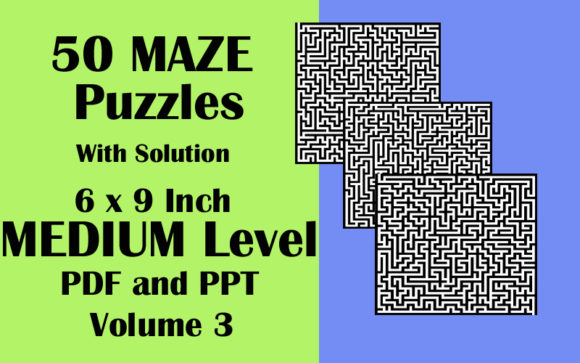
The primary appeal of this resource lies in its dual-format approach. Publishers receive both a print-ready PDF and an editable PPTX file. This flexibility is crucial in the modern self-publishing landscape. While many creators simply want to upload and publish, others need the ability to tweak layouts, add branding, or adjust difficulty levels. By providing 50 unique medium-level mazes across these formats, the package supports both rapid deployment and customized project development without requiring advanced graphic design skills.
Technical Precision for Print-on-Demand Success
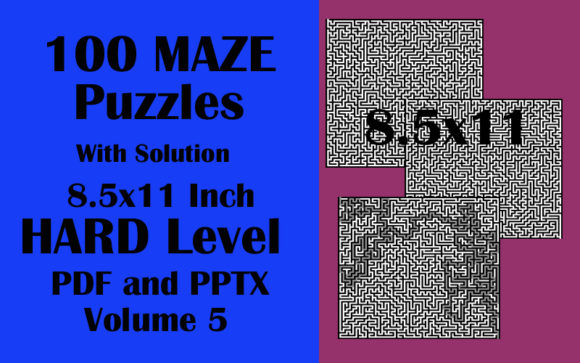
One of the most common reasons for KDP rejection or poor customer reviews is improper formatting. Margins that are too tight, bleed issues, or incorrect trim sizes can ruin an otherwise great puzzle book. The Maze Puzzle 50 Puzzles with Solutions KDP Interior eliminates this guesswork by adhering to strict industry standards. The files are pre-formatted for a 6″ x 9″ trim size with no bleed, which is the standard specification for trade paperback activity books.
This specific trim size is highly popular for maze books because it offers a portable form factor that still provides enough surface area for a satisfying solving experience. The "no bleed" configuration ensures that all critical content stays safely within the safe zone, preventing any part of the maze from being trimmed off during the binding process. With 64 total pages allocated for 50 puzzles plus solutions, the pagination is already calculated. This means publishers do not have to manually arrange pages or worry about blank sheets disrupting the flow. The technical heavy lifting is done, allowing the creator to focus on cover design and marketing strategy.
Understanding the Medium Difficulty Sweet Spot
Selecting the right difficulty level is perhaps the most critical decision when creating a puzzle book. Too easy, and solvers feel patronized; too hard, and they become frustrated and leave negative feedback. Medium-level mazes occupy the most profitable niche in the activity book market. They appeal to a broad demographic, including older children, teenagers, adults looking for light cognitive exercise, and seniors maintaining mental acuity.
The mazes included in this collection are generated to hit this specific engagement zone. They offer enough complexity to require focus and strategy but remain solvable without causing exhaustion. This balance increases the likelihood of positive reviews mentioning the "perfect challenge" or "great for travel." Furthermore, having exactly 50 puzzles allows for a substantial book spine, which improves visibility on physical shelves and search results, while keeping production costs manageable. The large print format, featuring one puzzle per page, further enhances accessibility, making the book suitable for users with varying visual needs without requiring a separate large-print edition.
The Strategic Value of Editable Source Files
While the ready-to-upload PDF is convenient, the inclusion of a PPTX file transforms this asset from a static product into a dynamic tool. PowerPoint is surprisingly capable for layout design, and many KDP publishers prefer it over complex software like Adobe InDesign due to its familiarity and ease of use. With the editable source file, creators can modify the 50 Maze Puzzle Medium Level PDF PPTX V3 content to suit specific niches.
For example, a publisher targeting a holiday theme could easily add festive borders or seasonal instructions to each page. Someone creating a branded workbook for a coaching business might insert logos or motivational quotes between puzzles. Educators could add vocabulary words or math problems to the empty spaces, turning a simple maze book into a multi-disciplinary learning tool. This editability extends the lifespan of the asset significantly. Instead of being a single-use upload, it becomes a foundational template for an entire series of related products.
Ensuring Originality and Content Safety
In the saturated KDP marketplace, duplicate content is a major risk. Amazon’s algorithms actively penalize books that share identical interiors with existing publications. Using generic, widely distributed free puzzles can lead to account warnings or blocked listings. This package addresses that concern head-on by guaranteeing new, non-duplicate content associated with Seven Elephant.
Originality is not just about avoiding penalties; it is about building a defensible brand. When customers recognize that your puzzle books offer fresh challenges they cannot find elsewhere, they are more likely to follow your author page and purchase future releases. The assurance that these 50 mazes are newly generated provides peace of mind for serious publishers. It removes the anxiety of copyright infringement and ensures that the value proposition of the book remains intact. Each puzzle serves as unique intellectual property that contributes to the long-term equity of the publishing portfolio.
Optimizing Workflow for Scale
Professional KDP publishing is ultimately a volume game. The faster a creator can move from concept to live listing without sacrificing quality, the higher their potential return on investment. Pre-formatted interiors drastically reduce production time. What might normally take twenty hours of design, testing, and formatting can be accomplished in less than an hour.
This efficiency allows publishers to test multiple niches simultaneously. Rather than investing weeks into a single title, a creator can release several variations using the same high-quality base content. They might create a "Travel Maze Book," a "Senior Brain Games" edition, and a "Teen Logic Puzzles" volume, all utilizing the same core Maze Puzzle 50 Puzzles with Solutions KDP Interior adapted through the PPTX file. This agile approach enables data-driven decision-making, where publishers can double down on what sells and pivot quickly away from what doesn’t.
Practical Considerations Before Publishing
Even with a perfect interior, success requires attention to detail. Before uploading the PDF, publishers should always download a proof copy or use KDP’s previewer tool to verify that margins and alignment appear correct on their specific monitor setup. While the file is tested and formatted, individual computer settings can sometimes alter how fonts or vectors render.
Additionally, consider how the solutions section is organized. In this 64-page layout, solutions are typically placed at the back. Some publishers prefer to add a note on the first page indicating where answers can be found, improving user experience. When modifying the PPTX, ensure that any added elements respect the original safe zones. Adding decorative elements is encouraged, but pushing them too close to the gutter or outer edge can result in trimming issues. Finally, remember that the cover must match the 6″ x 9″ no-bleed specifications exactly. A mismatched cover and interior is the most frequent cause of upload errors, so keeping the technical specs aligned between the interior asset and the cover designer is essential for a smooth launch.