Designing Intentional Workflows with a Sophisticated 2021 Dated Printable Planner
In an era defined by digital saturation and notification fatigue, the deliberate return to analog planning represents more than a nostalgic preference; it is a strategic response to the cognitive demands of modern professional life. For entrepreneurs, freelancers, marketers, and creators, the tools used to organize time are inextricably linked to productivity and mental clarity. The 2021 Dated Printable Planner emerges within this context not merely as a stationery item, but as a customizable infrastructure for personal and business management. Designed in sophisticated shades of gray, this resource addresses the specific aesthetic and functional needs of professionals who require a system that is both visually calming and rigorously structured.
The shift toward printable planning solutions reflects a broader evolution in how independent professionals manage their workflows. Unlike mass-produced planners that force users into pre-determined layouts, a dated printable PDF planner offers modularity. This flexibility allows individuals to construct a planning system that mirrors their unique cognitive patterns and business cycles. Whether utilized as a personal productivity tool or developed as a low-content book for Amazon KDP, understanding the nuances of this format reveals why tailored, minimalist planning remains a vital component of professional success.
The Psychology of Minimalist Design in Professional Planning
The choice of sophisticated shades of gray for this planner is a deliberate design decision rooted in cognitive psychology and user experience. In a marketplace often saturated with vibrant colors and decorative elements, a monochromatic palette serves a distinct functional purpose. For professionals managing complex projects, visual noise can compete for attentional resources. A neutral color scheme reduces cognitive load, allowing the content—tasks, schedules, and goals—to take precedence over decoration.
This aesthetic aligns with contemporary trends in workspace design and digital interfaces, where minimalism is associated with focus and premium quality. For creators and marketers, the visual presentation of their tools matters. A planner that looks professional on a desk or in a client meeting reinforces a brand identity centered on clarity and organization. Furthermore, for those utilizing this template for KDP publishing, the grayscale design ensures high-quality reproduction without the cost and technical variability associated with full-color printing. It bridges the gap between personal utility and commercial viability, offering a product that feels bespoke rather than generic.
Modular Architecture: Adapting to Non-Linear Workflows
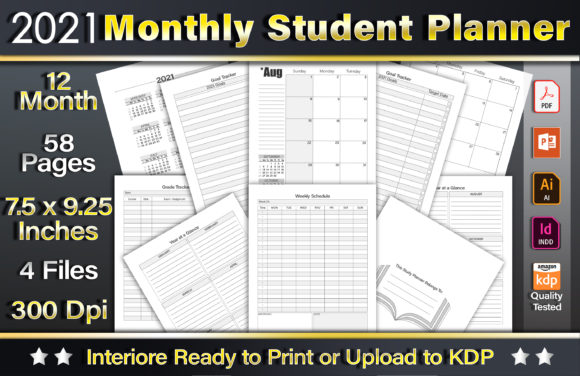
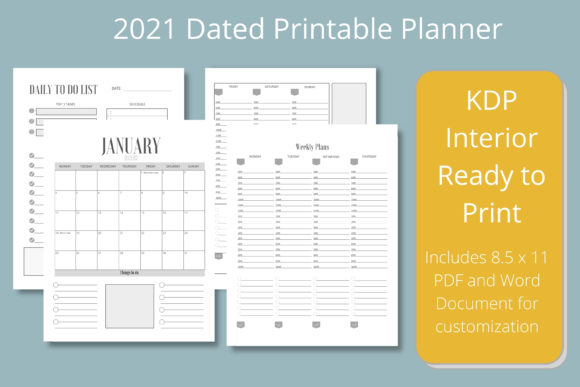
The traditional linear planner often fails to accommodate the dynamic nature of freelance and entrepreneurial work. The 2021 Dated Printable Planner distinguishes itself through a mix-and-match architecture that respects the variability of professional life. By providing separate components—including monthly calendars, weekly scheduling sheets, and daily to-do lists—the system empowers users to curate their own organizational rhythm.
Monthly Strategic Oversight
The monthly calendar pages serve as the strategic command center. Dated specifically for 2021 and including common holidays, these pages provide necessary temporal anchors. However, the inclusion of dedicated space for notes and to-do items transforms them from passive date trackers into active planning surfaces. Professionals use this space to map out product launches, content calendars, or quarterly objectives. The ability to print only the months needed, or to reprint specific months when plans pivot, offers a level of agility that bound notebooks cannot match.
Weekly Time Blocking and Flexibility
For knowledge workers, time is the primary inventory. The weekly planning sheets included in this package feature hourly time blocking slots, a technique widely endorsed by productivity experts for managing deep work. Time blocking moves tasks from abstract lists to concrete appointments, reducing decision fatigue throughout the day. Crucially, these sheets also include a flexible tasks area. This hybrid approach acknowledges that while structure is necessary, rigidity is brittle. The flexible zone captures overflow tasks, unexpected opportunities, or creative ideas that do not fit neatly into an hourly slot, preventing the frustration that often leads to planner abandonment.
Daily Tactical Execution
The Daily To-Do list acts as the tactical interface of the planning system. With designated sections for top tasks, comprehensive to-do lists, scheduling, notes, and goal tracking, it facilitates the translation of high-level strategy into immediate action. The "top tasks" section enforces prioritization, compelling users to distinguish between urgent noise and meaningful progress. Goal tracking at the daily level ensures alignment with longer-term objectives, creating a feedback loop that keeps daily efforts connected to annual ambitions.
Bridging Analog Intent with Digital Customization
A defining feature of this package is the inclusion of a Microsoft Word file, which fundamentally alters the relationship between the user and the planner. While the PDF provides a ready-to-use solution, the Word document unlocks true ownership. In the broader landscape of productivity tools, there is a growing demand for software and templates that are interoperable and editable. Users no longer want to be locked into rigid ecosystems; they seek tools that adapt to their evolving methodologies.
For individual users, this editability means the planner can grow alongside their business. A freelancer transitioning to agency owner might need to add sections for team delegation or client invoicing. A content creator might customize the daily sheet to include social media metrics or filming schedules. This capacity for personalization extends the lifespan of the planner beyond a single year, making it a sustainable system rather than a disposable commodity.
From a technical perspective, the availability of source files also mitigates the friction often associated with printable products. Users can adjust margins for different binding methods, modify fonts for accessibility, or translate content for international clients. This democratizes high-end planner design, making professional-grade organization accessible to anyone with basic word processing skills.
The Dual Utility: Personal Productivity and KDP Publishing
The relevance of the 2021 Dated Printable Planner extends beyond personal use into the realm of digital entrepreneurship. The low-content book market on Amazon KDP has matured significantly, moving past simple lined journals to specialized, value-driven tools. This planner package is explicitly tested for 8.5 x 11 size upload, addressing one of the most common pain points for self-publishers: formatting compliance.
For aspiring publishers, this template represents a case study in niche product development. Success in the planner market no longer comes from generic designs but from solving specific problems for specific audiences. The sophisticated gray aesthetic targets a demographic that values professionalism over whimsy. The inclusion of time-blocking and goal tracking appeals to productivity enthusiasts rather than casual journalers. By understanding these distinctions, creators can leverage this template as a foundation for building a publishing portfolio that resonates with underserved segments of the market.
Furthermore, the modular nature of the content allows publishers to create multiple derivatives from a single asset base. A "Freelancer’s Weekly Planner" might emphasize the time-blocking sheets, while a "Goal Getter’s Journal" might prioritize the daily tracking pages. This efficiency is crucial in a competitive marketplace where consistency and volume matter. The tested dimensions and clean layout reduce the risk of rejection during the KDP review process, streamlining the path from creation to publication.
Evolving Expectations in Personal Organization
The enduring interest in dated printable planners signals a permanent shift in consumer expectations regarding organization tools. We have moved past the era where a planner was simply a place to record appointments. Today’s professionals expect their planning systems to function as external hard drives for their executive function. They require tools that support metacognition—the ability to think about thinking—and facilitate intentional living in an age of distraction.
The 2021 Dated Printable Planner meets these evolving needs by balancing structure with autonomy. It provides the scaffolding necessary for discipline without imposing a dogma that stifles creativity. The sophisticated visual language respects the user’s intelligence and professional identity. The integration of digital editing capabilities acknowledges that customization is not a luxury but a necessity for effective workflow management.
As we navigate increasingly complex work environments, the tools we choose become extensions of our professional philosophy. Whether used to manage a solo consulting practice, coordinate a creative studio, or build a publishing business, this planner exemplifies the intersection of form, function, and intentionality. It stands as a testament to the idea that even in a digital-first world, the act of physically organizing one’s time and thoughts remains a powerful catalyst for achievement. The continued relevance of such tools suggests that despite technological advancement, the fundamental human need for clarity, order, and tangible progress remains unchanged.
Practical Implementation for Maximum Impact
To fully leverage the capabilities of this planner system, users should approach it as a dynamic workspace rather than a static record. Professionals are encouraged to experiment with different paper weights and binding styles to find the tactile experience that best supports their workflow. Testing the Microsoft Word file before committing to large print runs ensures that any personalized modifications maintain the integrity of the original layout.
For KDP publishers, conducting keyword research around specific niches—such as "gray aesthetic planner," "time blocking journal," or "entrepreneur organizer"—will help connect this product with its ideal audience. Utilizing the "This Planner Belongs To" title page as a branding opportunity can further differentiate the product in search results. Ultimately, the value of this 2021 Dated Printable Planner lies not just in its pages, but in the intentional systems built upon them. By treating organization as a craft, professionals and creators can transform a simple collection of PDFs into a cornerstone of their success.