Integrating Cats Notebooks for KDP Into Your Publishing and Personal Organization Workflow
For self-publishers, content creators, and productivity enthusiasts, the search for reliable low-content book assets often involves balancing quality with speed. Cats Notebooks for KDP represents a specific solution within this ecosystem, designed to streamline the production of niche journals while serving a dedicated audience of pet owners. This resource is not merely a collection of images; it is a pre-formatted, 100-page interior file optimized for immediate integration into Amazon Kindle Direct Publishing workflows. Understanding how to leverage this asset effectively requires looking beyond the final product and examining its role in broader publishing strategies, personal organization systems, and creative project management.
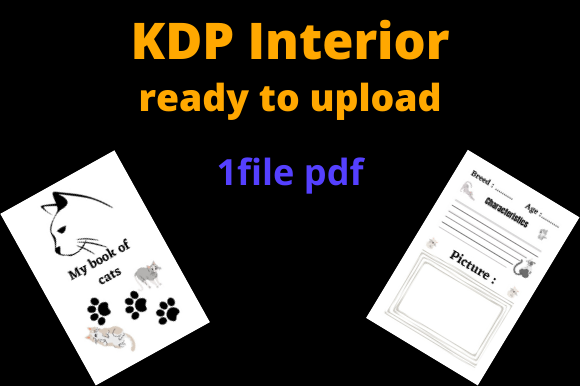
The core value of this notebook lies in its structural readiness. Formatted at the industry-standard 6x9 inches, it eliminates the technical friction often associated with setting up trim sizes, margins, and bleed settings. For professionals managing multiple titles or hobbyists documenting their own pets, this pre-configuration allows for a focus on metadata, cover design, and marketing rather than interior layout troubleshooting. The inclusion of an introductory page and structured fields for recording feline characteristics transforms a generic lined journal into a specialized tool for data collection and memory preservation.
Strategic Positioning in the Low-Content Publishing Pipeline
In the context of a KDP business workflow, Cats Notebooks for KDP functions as a validated baseline asset. Publishers often face bottlenecks during the interior design phase, where formatting errors can lead to rejected uploads or poor customer reviews. By utilizing a ready-to-upload PDF, creators can shift their operational focus to high-value activities such as keyword research, category selection, and A/B testing cover designs. This asset fits seamlessly into the "production" stage of the publishing pipeline, acting as a stable foundation upon which variable elements like branding and external marketing are built.
For educators, bloggers, or influencers in the pet niche, this notebook serves as a tangible extension of digital content. It bridges the gap between online engagement and physical utility. When integrated into a larger brand strategy, the notebook becomes a merchandise offering that reinforces authority and provides additional value to an existing audience. The specific prompts for cat characteristics allow users to engage deeply with the content, increasing the perceived value compared to blank journals. This differentiation is crucial in saturated markets where unique selling propositions drive conversion rates.
Functional Applications for Cat Owners and Professionals
Beyond commercial publishing, the practical application of this notebook extends to personal and professional animal care workflows. The structured layout supports systematic record-keeping, which is essential for various user segments:
- Veterinary and Health Tracking: Owners can document weight changes, dietary adjustments, medication schedules, and behavioral observations over time. Having a centralized physical record facilitates more accurate communication with veterinarians during appointments.
- Breeder and Foster Documentation: Professionals managing multiple animals require consistent data entry points. The standardized fields ensure that critical information regarding lineage, temperament, and developmental milestones is captured uniformly across different subjects.
- Pet Sitting and Care Handoffs: The introductory page and characteristic sections serve as an immediate reference guide for pet sitters or boarding facilities, reducing anxiety and ensuring continuity of care when the primary owner is absent.
- Memory Preservation and Grief Processing: For individuals processing the loss of a pet or celebrating a senior cat, the act of filling in specific traits and adding photographs creates a therapeutic archival process that digital formats sometimes lack.
The ability to add a picture of the cat adds a layer of personalization that enhances user retention. In product design terms, this feature increases the "endowment effect," where users value the object more highly because they have invested effort into customizing it. For publishers, highlighting this customization capability in product descriptions and A+ Content is a practical strategy for improving sales velocity.
Technical Integration and Quality Assurance
Successful implementation of Cats Notebooks for KDP requires attention to technical compatibility and quality control. While the PDF is formatted for 6x9 inch printing, users must verify that their cover files align precisely with these dimensions. Mismatches between interior and cover specifications are the most common cause of upload failures. Before initiating any print run or listing, it is advisable to download the KDP previewer tool to validate that the introductory page and subsequent content pages sit correctly within the safe zones.
Compatibility extends to paper type selection. Since this notebook includes space for photos and potentially mixed media (if users choose to paste physical pictures), publishers should consider the implications of standard white paper versus cream paper. Standard white paper typically offers better contrast for black-and-white interiors and is generally preferred for journals intended to include visual elements. Making informed decisions about paper stock ensures the final physical product meets user expectations regarding opacity and texture.
Efficiency in workflow also involves version control. If you plan to create variations of this notebook (e.g., breed-specific editions or seasonal covers), maintain a master file system that tracks which interior PDF corresponds to which cover file. This organizational discipline prevents costly errors when scaling a catalog. The 100-page count is a strategic sweet spot; it provides substantial utility without pushing the spine width into a category that requires significantly higher pricing to maintain royalty margins.
Enhancing Usability Through Metadata and Marketing Alignment
The physical attributes of the notebook must be reflected accurately in digital metadata to satisfy search intent and user needs. When listing this asset, avoid generic descriptors. Instead, articulate the specific workflow problems the notebook solves. Terms like "cat health tracker," "feline behavior log," "pet sitter instruction book," and "kitten development journal" connect the product to specific user tasks rather than broad categories. This alignment between the physical interior structure and digital discoverability is fundamental to E-E-A-T principles in e-commerce.
For creators using this notebook as a lead magnet or bonus resource, the introductory page offers prime real estate for cross-promotion. You might include a QR code linking to a digital community, a veterinary care checklist, or a related blog post. This transforms the static PDF into a dynamic node within a larger content ecosystem. However, ensure any added links comply with KDP’s current policies regarding external redirection to avoid account penalties.
User experience testing is another critical integration step. Before mass marketing, print a proof copy and use it as intended. Write in the characteristic fields, test different pen types for bleed-through, and assess whether the photo placement area is intuitively located. This hands-on validation provides authentic insights that can inform product descriptions and answer potential customer questions proactively. Authenticity in describing the user experience builds trust and reduces return rates.
Long-Term Value and Scalability Considerations
Sustainable use of Cats Notebooks for KDP involves thinking about lifecycle management. As a publisher, monitor customer feedback specifically regarding the interior layout. Are users asking for more space in certain fields? Do they want additional sections for vaccination records? Treating the PDF as a living document that evolves based on user data ensures long-term relevance. Small iterative updates to the interior file can revitalize a backlist title and improve organic ranking through updated publication dates and enhanced content satisfaction.
For individual users and professionals, the notebook serves as a longitudinal dataset. Over months or years, the accumulated entries provide trends that isolated digital notes cannot replicate. Educators and researchers in animal behavior may find that encouraging students or clients to use standardized physical notebooks generates richer qualitative data than ad-hoc digital methods. The tactile nature of writing by hand has been shown to improve memory retention and cognitive processing, making this analog tool a valid complement to digital productivity apps.
Integration also means establishing routines. For pet owners, linking the notebook update process to existing habits—such as monthly weigh-ins or annual vet visits—ensures consistent usage. For publishers, integrating the notebook launch into seasonal planning cycles (e.g., National Cat Day, holiday gift guides) maximizes visibility. The 6x9 format is portable enough for travel yet substantial enough for desk reference, supporting usage in varied contexts from home offices to veterinary waiting rooms.
Ultimately, Cats Notebooks for KDP is a functional component within larger systems of creation, commerce, and care. Its value is realized not just in the download, but in the deliberate application of its structure to solve real-world problems. Whether streamlining a publishing business, organizing complex pet care data, or preserving cherished memories, success depends on thoughtful integration, technical diligence, and a clear understanding of the end-user's workflow. By approaching this asset with a process-oriented mindset, creators and consumers alike can extract maximum utility from its 100 pages of purposeful design.