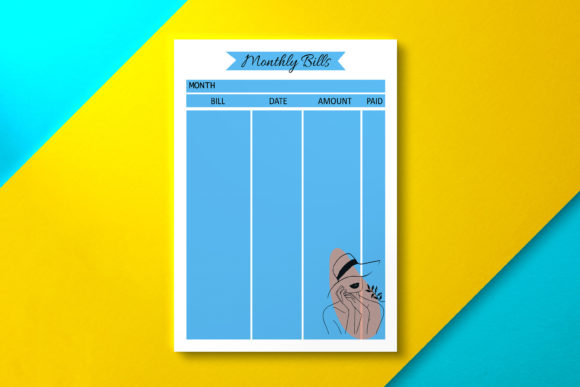
Monthly Bill Sheet Blue: Streamlining Financial Tracking and KDP Publishing Workflows
Effective financial organization requires tools that balance aesthetic appeal with rigorous functionality. The Monthly Bill Sheet Blue serves as a specialized asset for individuals and publishers who need to track expenses, manage subscriptions, or create low-content books for commercial distribution. Unlike generic templates, this resource is engineered with specific dimensional standards and color psychology in mind. The calming blue palette reduces visual fatigue during data entry, while the pre-formatted structure eliminates the setup time typically associated with creating financial trackers from scratch. Whether you are managing personal household accounts or preparing a 50-page manuscript for Amazon KDP, understanding how to integrate this sheet into your existing workflow is essential for maintaining consistency and efficiency.
Integrating Financial Tracking into Daily Operations
For professionals, freelancers, and small business owners, the Monthly Bill Sheet Blue functions as more than a static record; it is an active component of cash flow management. The utility of this tool extends across three distinct phases of any financial cycle: preparation, execution, and review.
Pre-Cycle Preparation and Budget Allocation
Before a billing cycle begins, the sheet acts as a forecasting instrument. Users can populate the "Due Date" and "Expected Amount" fields based on previous months' data. This proactive step transforms the document from a reactive ledger into a planning tool. For entrepreneurs managing multiple software subscriptions or inventory costs, seeing these obligations laid out in the standardized Letter or A4 format allows for immediate identification of cash flow gaps. The blue color scheme provides a neutral background that makes highlighted priorities or urgent payments stand out without causing visual clutter.
Active Monitoring and Data Entry
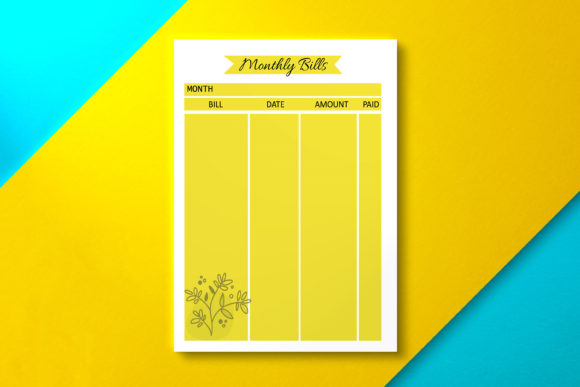
During the payment phase, usability becomes the primary concern. The layout is designed to accommodate both digital annotation and physical handwriting. If printed on Half Letter or A5 paper, the sheet fits into standard planners and binders, allowing users to reconcile accounts on the go. For those working digitally, the PDF format ensures compatibility with tablet styluses and note-taking applications. The structured columns guide the user through necessary data points—payee, date, amount, and status—reducing the cognitive load associated with tracking. This consistency is vital for freelancers who must separate business expenses from personal costs for tax purposes.
Post-Cycle Analysis and Archiving
After bills are paid, the completed sheet serves as an audit trail. Because the Monthly Bill Sheet Blue maintains a uniform design across all size variations, archiving becomes systematic. Users can compile twelve months of Letter-sized sheets into a comprehensive annual report or scan A5 versions for cloud storage. This standardized output simplifies end-of-year tax preparation and expense analysis. For creators selling financial printables, this post-cycle value is a key selling point; customers are not just buying a piece of paper, but a system for long-term financial clarity.
Technical Specifications and Format Compatibility
Selecting the correct size variant is critical for seamless integration into your specific ecosystem. The Monthly Bill Sheet Blue is available in four distinct formats, each serving unique operational needs.
- Letter Size (8.5 x 11 inches): The standard for North American business and home office use. This size offers maximum writing space and is ideal for filing cabinets or standard desktop printers. It is the preferred format for detailed expense tracking where additional notes or receipt attachment areas are required.
- Half Letter (5.5 x 8.5 inches): Optimized for personal planners and portable organization. This size allows users to carry their bill tracker alongside daily schedules without bulk. It is particularly useful for students or professionals who manage finances within a bullet journal or disc-bound system.
- A4 (210 x 297 mm): The international standard for business documentation. Essential for users outside North America or for creators targeting global markets on digital platforms. A4 ensures that printing margins align correctly with international paper supplies.
- A5 (148 x 210 mm): A compact option for minimalist tracking or insertion into smaller organizers. This format forces concise data entry and is often used as a supplementary tracker for specific categories like utilities or subscriptions rather than comprehensive finance management.
Understanding these dimensions prevents formatting errors during printing and ensures that digital users select files compatible with their device screen ratios. When integrating with other tools, such as accounting software or spreadsheet applications, these PDFs serve as excellent verification documents. You can export data from QuickBooks or Excel and cross-reference it against the physical or digital Monthly Bill Sheet Blue to ensure no transaction was miscategorized.
Leveraging the 50-Page Bundle for KDP and Commercial Use
For publishers and digital product creators, the 50-page Monthly Bill Letter Ready Commercial Use file represents a significant production asset. Creating low-content books for Amazon KDP or Etsy requires high-volume, consistent interiors. Manually duplicating a single page fifty times introduces risks of alignment drift, margin errors, and metadata corruption. This pre-assembled bundle mitigates those technical risks.
Workflow Efficiency for Publishers
When preparing a manuscript for KDP upload, time is money. The 50-page PDF is pre-paginated and formatted to Letter size specifications, adhering to standard bleed and safe zone requirements. This allows creators to bypass the repetitive task of interior design and focus instead on cover creation, keyword research, and marketing. The blue theme is versatile enough to fit multiple niches, including personal finance, budget planning, debt payoff journals, and small business ledgers.
Quality Control and Print Considerations
Even with ready-made files, quality assurance remains the publisher's responsibility. Before uploading to KDP, always download the proof copy or use the online previewer to check the blue saturation. Digital screens display RGB colors vibrantly, but KDP standard color printing uses CMYK, which can sometimes render blues darker or duller than expected. Testing a single proof ensures the Monthly Bill Sheet Blue maintains its professional appearance in physical form. Additionally, verify that the margins accommodate the binding gutter; while the file is designed for commercial use, paper thickness and page count can slightly shift the safe zone in thicker volumes.
Commercial Licensing and Product Differentiation
Holding commercial rights to this asset opens multiple revenue streams beyond simple book publishing. Creators can extract individual pages to sell as standalone digital downloads, bundle them with other financial trackers to create premium kits, or use them as lead magnets to build an email list. However, differentiation is key in a saturated market. To add value, consider pairing the Monthly Bill Sheet Blue with complementary resources such as savings challenge trackers, debt snowball worksheets, or annual budget overviews. The cohesive blue aesthetic allows for easy branding across an entire product line, creating a recognizable visual identity for your store or publishing imprint.
Best Practices for Long-Term Implementation
Sustainability in financial tracking or publishing depends on establishing reliable habits and systems. For personal users, consistency is achieved by linking the use of the Monthly Bill Sheet Blue to an existing trigger, such as receiving a paycheck or sitting down for Sunday planning. Storing the PDF in a dedicated cloud folder with clear naming conventions (e.g., "2024-01-Bill-Sheet-Blue") prevents version confusion and ensures historical data is retrievable.
For commercial users, organize your source files logically. Keep the master 50-page PDF separate from any modified versions you create for specific products. Maintain a record of which platforms you have published to and under what titles to avoid duplicate content issues. While the interior is ready-made, success on KDP relies heavily on unique metadata. Write custom descriptions that highlight the specific benefits of the blue color scheme and the practical layout, rather than relying on generic filler text.
Finally, solicit feedback if you are selling this product. User experience data can reveal whether the A5 version needs wider lines for handwriting or if the Letter version requires a notes section. Treating the Monthly Bill Sheet Blue as an evolving product rather than a static file allows you to refine your offerings and better serve your audience. Whether used for personal solvency or commercial profit, this tool exemplifies how thoughtful design and proper formatting can streamline complex processes, turning the mundane task of bill tracking into an organized, efficient, and even visually pleasing routine.